Somewhere between a quick weeknight puzzle and a slow-burn weekend project sits the custom 1000 piece puzzle. It's the size where the hobby gets serious: too many pieces to finish in one sitting, too much surface for a weak image to coast on. If you're weighing this size against the smaller ones, here's what actually changes, and how to choose a photo or prompt that holds up once it's cut into a thousand pieces.
Who the Custom 1000 Piece Puzzle Size Is For
500 pieces is Puzzably's classic size, and for most people it's the right call: a finished size of 53 x 39 cm (21 x 15.5 in), a build you can knock out over a couple of evenings, and a puzzle that arrives in the same collector tin as every other size, art printed on the lid, included in the price.
The custom 1000 piece puzzle asks for more. Finished, it measures 76 x 51 cm (30 x 20 in), big enough that it needs a dedicated table or puzzle board for the several days it'll likely be out. Where a 500-piece puzzle is a weekend project, 1000 pieces is closer to a standing appointment: a little time most evenings, sorting by edge and color before the picture starts to resolve. If you like a puzzle you can start and finish in an afternoon, stay at 500. If you want something that holds your attention for a week and rewards patience, this is the size.
Why Image Choice Matters More at 1000 Pieces
At 500 pieces, almost any image works. Pieces are larger, sections are more forgiving, and a slightly flat photo still gives you plenty to grab onto. At 1000 pieces, every piece covers less of the picture, which means the image itself has to carry more.
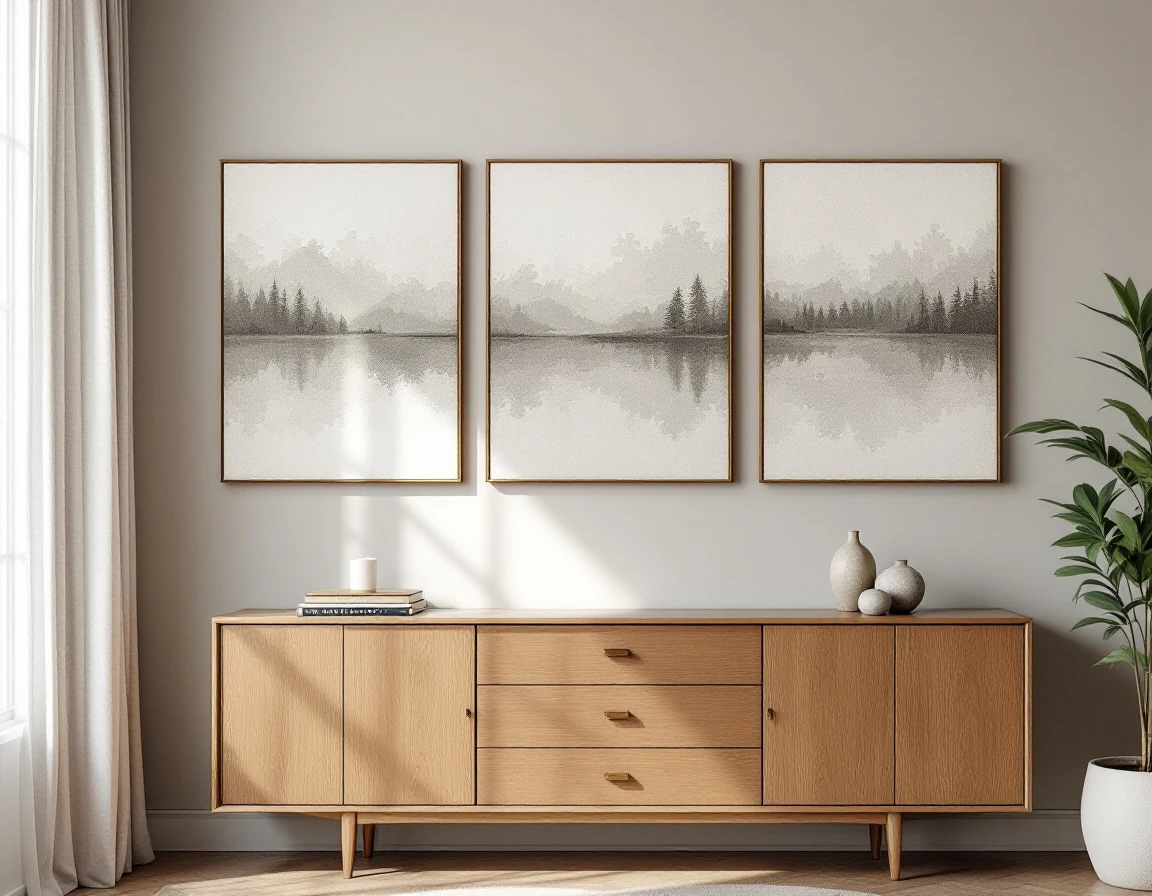
Two things matter most. First, detail density: an image with real texture across the frame (bark, brick, fabric, water) gives each piece something distinct to be. A smooth, minimal image can leave you with dozens of pieces that look nearly identical, which is a different kind of puzzle, harder, not necessarily better. Second, contrast: puzzles solve fastest when neighboring areas read as visibly different tones or colors. Flat, low-contrast images (overcast fields, soft interiors, foggy mornings) blur those boundaries.
Sky-heavy images are the clearest example. A wide, cloudless sky might be a beautiful photo, but at 1000 pieces it becomes a field of near-identical blue with no landmarks to sort by. A little cloud texture, a tree line breaking the horizon, or a bird in frame goes a long way. None of this means skip the sunset photo, just crop it so the sky isn't doing all the work.
Prompt and Photo Tips for a 1000-Piece Canvas
Whether you're starting from a prompt or a photo, the goal is the same: give the puzzle enough visual information to stay interesting corner to corner.
For prompts, describe layers, not just a subject. "A cabin in the mountains" is a fine start, but "a cabin in the mountains, pine trees in the foreground, a rocky ridge behind it, low clouds catching the light" gives the studio more to work with, and gives you a picture with foreground, midground, and background instead of one flat scene. Ask for texture by name: weathered wood, water reflections, wildflower fields. Skip prompts that lean on one big gradient (a plain sunset sky, a solid wall of color) unless a slow puzzle is the point.
For a 1000 piece photo puzzle, start by choosing your path. A sharp, high-resolution photo can go in exactly as it is, no AI step, printed the way you took it. A photo you love that's a little soft, a little flat, or thin on the texture this size wants works better as a reference instead: the studio keeps your actual subject, the dog, the kid, the street, and builds a fuller scene around it, with more of the detail and contrast 1000 pieces rewards. Either way, resolution and framing still do the work. Start with the highest-resolution version of the photo you have, shot in good light. If it's a portrait or group shot, a tighter crop keeps faces recognizable once they're spread across 76 cm of finished puzzle; a wide shot of a big group reads better at 2000 pieces than 1000. If it's a landscape, look for a horizon with something in it (tree line, skyline, rock formation) rather than an even split of field and sky. Upload a photo and see how it looks before you commit to a size.
The Collector Tin Comes Included
The collector tin is included at every size, and at 1000 pieces it earns its keep: your art printed on the lid, the puzzle sealed inside, no add-on required. A finished 76 x 51 cm puzzle deserves storage sturdier than flat cardboard.
The tin isn't just packaging. Your artwork prints on the lid too, so the image you chose shows up twice, once assembled on the table and once on a tin built to be opened and closed for years. Every lid also carries a small script signature tucked into the corner, like an artist signing a painting, the Puzzably mark by default, though you can swap in your own name, upload a logo, or turn it off, free either way. It's also a better way to store a puzzle you're proud of: easier to shelve than flat cardboard, sturdier if it gets moved around. Once you've finished, the tin makes a natural home for it, and if you're deciding how to show off the assembled piece itself, framing, display boards, and puzzle glue are the usual options.
A custom 1000 piece puzzle, tin included, runs $79.99.
What Happens After You Order Your Custom 1000 Piece Puzzle
Ordering one is the same process at every size. Upload a photo or write a prompt, and you'll get a couple of AI takes to compare. Keep the one that's right, or refine it until it is.
Before anything goes to print, you'll approve a print preview, so there are no surprises once it arrives. From there, production takes over: shipping is free within the US, and puzzles typically arrive in about 1 to 2 weeks. If yours shows up damaged or off-color, send a photo within 14 days and we'll replace it.
A custom 1000 piece puzzle takes a little more thought going in, from image to layout to the extra evenings on the table, but the payoff is a puzzle that holds attention for days instead of hours, and a tin worth keeping long after the last piece goes in. When you're ready, start your puzzle.