There is a species of productivity content that encourages you to make your hobbies efficient. Run while listening to audiobooks. Read while on the stationary bike. Practice your second language during your commute. The hobby, in this framing, is acceptable only as a vehicle for something else - a delivery mechanism for self-improvement, a way of reclaiming dead time.
The problem with this approach to leisure is not that it doesn't work. It does work, in the way that eating while answering email works. The problem is that it doesn't give you anything you couldn't also get from not doing the hobby. The audiobook can be listened to without the running. The language app runs whether or not you're in a car.
A slow hobby is the opposite of this. It is useless in the productive sense. It cannot be layered with another activity without destroying both. It asks for full attention and returns nothing except the doing of it. What it gives you - the specific quality of attention that comes from focusing on something difficult and physical for an hour - is not transferable from any other context. You cannot get it from a podcast. You cannot get it from a meditation app.
Here are seven slow hobbies that fit this description. They are not ranked. They are not optimised for any outcome. That is the point.
1. Film Photography
A 35mm camera with a 36-exposure roll forces a particular kind of attention. You have 36 shots. Each one costs approximately 60 cents to develop. You cannot immediately review what you've taken.
This structure produces a discipline that digital photography has made rare: you look before you shoot. You wait for the light to change. You decide whether the frame is worth the frame.
The other thing film photography does is introduce a delay between the moment and the image. You take the photograph in October and see it in November, when the roll is finished and processed. The image is not a record of the present - it is a letter from a version of yourself who knew less about how the light would fall that afternoon.
There is no productivity argument for film photography. It produces fewer images per hour than digital and requires more time to process each one. It is worth doing because it changes how you look at things before you raise the camera.
2. Fountain Pen Writing
The fountain pen is a tool that slows you down by design. The nib requires a consistent angle and pressure. The ink flow rewards a light hand and punishes grip. Writing with a fountain pen takes longer than writing with a ballpoint and is impossible at the speed of thought.
This slowing is the feature. Thoughts that arrive faster than you can write them are thoughts you must choose between. The act of selecting which thought is worth the pen's attention is, quietly, a filtering process - less sophisticated than editing, more honest than the delete key.
The secondary pleasure is the object itself. A good fountain pen is a piece of engineering from a tradition that has not changed in its essentials since the nineteenth century. The way the piston draws ink, the way the nib separates to allow flow, the way the cap seals to prevent drying - these mechanisms are not improvements on earlier mechanisms, they are the same mechanisms, refined. The object has a history that your thoughts, flowing through it, briefly join.
3. Bread Baking
Bread made by hand requires roughly 24 hours from start to finish if done properly. The first fermentation takes 8–12 hours. The shaping requires a second rise of 4–8 hours. The baking takes 45 minutes in a Dutch oven that has preheated for 30 minutes.
During most of this time, nothing is happening. The dough is working. You are waiting.
The productive objection to bread baking is that you could buy excellent bread. This is true. The rebuttal is that the bread-baking schedule imposes a particular kind of planning on your week - you start the levain on Thursday evening because you want bread for the weekend. This relationship between decision and outcome, stretched across two days, is different from the usual relationship between decision and outcome in modern life, which tends toward immediacy.
The other thing bread baking teaches is failure tolerance. A loaf that doesn't rise is not a crisis. You learn something from the failure, adjust the hydration or the timing or the starter's activity level, and try again next week.
4. Hand Embroidery
The embroidery hoop holds the fabric. The needle and thread move through it in a pattern that requires counting and repeating. Progress is measured in stitches - individually nearly invisible, collectively forming something.
There is nothing about embroidery that is fast. A small finished piece - perhaps 100 square centimetres of dense stitching - requires 20 to 40 hours of work. A large piece requires months.
What embroidery produces is the experience of time having gone somewhere specific. Most of the time we spend in the week is difficult to account for - absorbed by tasks that are immediately replaced by other tasks, by conversations that don't leave traces, by screens that are cleared and reset. The finished embroidery is an account of hours. You can look at it and know that the weeks it represents existed.
The meditative argument for embroidery - that the repetitive motion is calming, that it focuses the mind - is real but secondary. The primary argument is the object that results from it, and the specific relationship you have with that object because you made it yourself.
5. Puzzle Assembly
A 500-piece puzzle takes three to five hours for most adults. During that time, you are doing one thing: looking for where pieces belong.
The cognitive profile of puzzle assembly is unusual - it is problem-solving without the anxiety of important problems. Each piece has a correct location, and the location exists. It is not your job to invent the solution; your job is to find it. This is a different quality of focus from the open-ended problem-solving of most intellectual work, and it seems to sit in a different part of the nervous system.
The puzzle also has no yield-maximisation logic. You cannot do it faster by trying harder. The piece is findable when you've covered enough of the image to narrow down its location. The pace is set by the puzzle, not by your ambition.
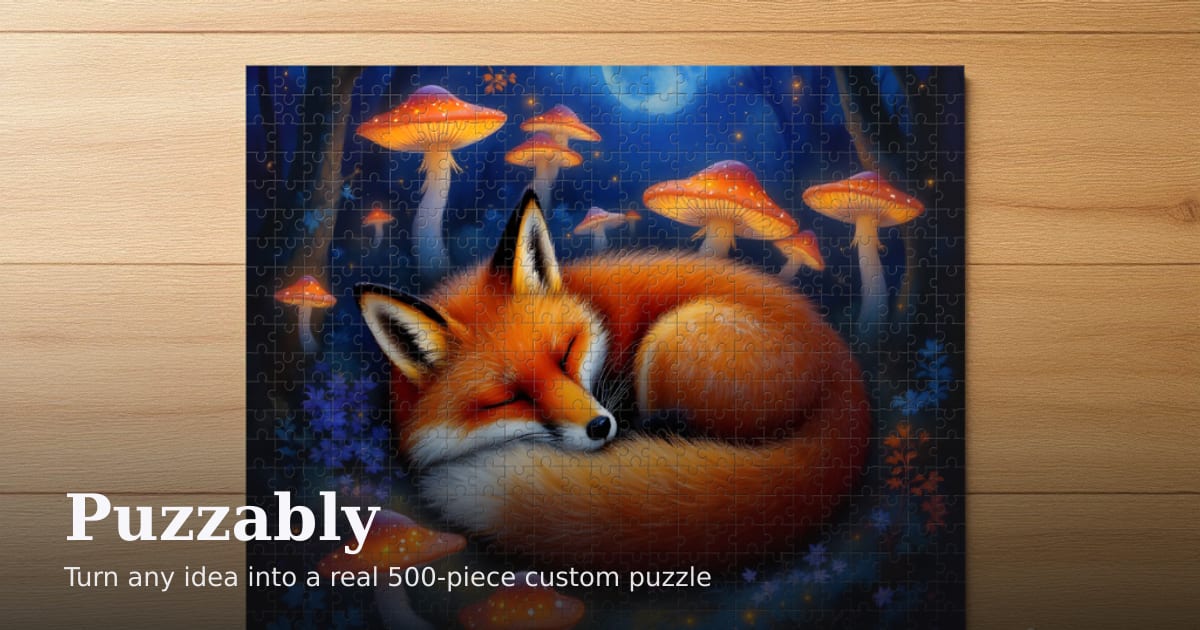
For puzzles to work as slow hobbies rather than as family games, the image matters. A puzzle with a strong image - one you would be willing to have on a wall after it's assembled - rewards the assembly in a way that a generic stock-image puzzle does not. The time you spend on the puzzle is also time you spend looking at the image. If the image is worth looking at, the time compounds.
6. Vinyl Record Listening
The vinyl record imposes structure on music consumption by making it inconvenient. You cannot play vinyl without being in the same room as the turntable. You cannot shuffle. You cannot skip easily. The record plays the album in its designed sequence, at a fixed volume level that requires you to be present enough to adjust it.
These inconveniences are why vinyl listeners report a different quality of attention than streaming listeners. The barrier to changing the music is high enough that you are more likely to listen to what you've chosen rather than immediately replace it with something else. You are more likely to hear the whole album.
The turntable also requires occasional maintenance - cleaning the stylus, demagnetising, occasionally recalibrating the tonearm pressure. This involvement with the mechanism of playback creates an ongoing relationship with the object that streaming has eliminated.
The album sleeve, handled before and after each play, is a visual object that has been designed to be seen at 30 centimetres for as long as the listening lasts. This is a non-trivial amount of design work, now largely invisible in a streaming context.
7. Ikebana or Flower Arranging
Ikebana is the Japanese art of flower arrangement with a technical vocabulary, a tradition of schools with different philosophies, and a practice that is in some respects easier to begin and in others more demanding than Western decorative arrangement.
The central Ikebana principle is negative space. The arrangement includes the emptiness as much as the stems and flowers. Where Western flower arranging tends toward abundance - more is more, fill the vase - Ikebana tends toward reduction: three stems, carefully placed, in a low vessel that does not call attention to itself.
The reduction is the skill. Choosing which three stems, and where each one goes in relation to the others, requires the same faculty that good prose requires: knowing what to leave out. Most beginner Ikebana arrangements include too many elements. Learning to remove things until the arrangement is only what it needs to be is a lesson that takes years and that applies to more than flower arranging.
The second Ikebana principle is seasonality. You work with what is available in the current season, not with what you would prefer to have. The arrangement is made with cherry blossoms in spring and with bare branches in winter. The season imposes its materials, and the skill is in responding to what it gives you.
On the Relationship Between These Hobbies
These seven activities have nothing in common except their structure: they take more time than alternatives, they cannot be done simultaneously with other activities, and they produce something that could not be produced faster without becoming something different.
They are not for everyone. They require disposable time, which is not equitably distributed. They require a tolerance for process without immediate payoff. They require, in some cases, equipment and materials that have a cost.
But for the people who find them, they solve a problem that optimised time does not: the problem of having done something. Not having been productive. Not having maximised the hour. Having done something specific, with your hands, for its own sake.
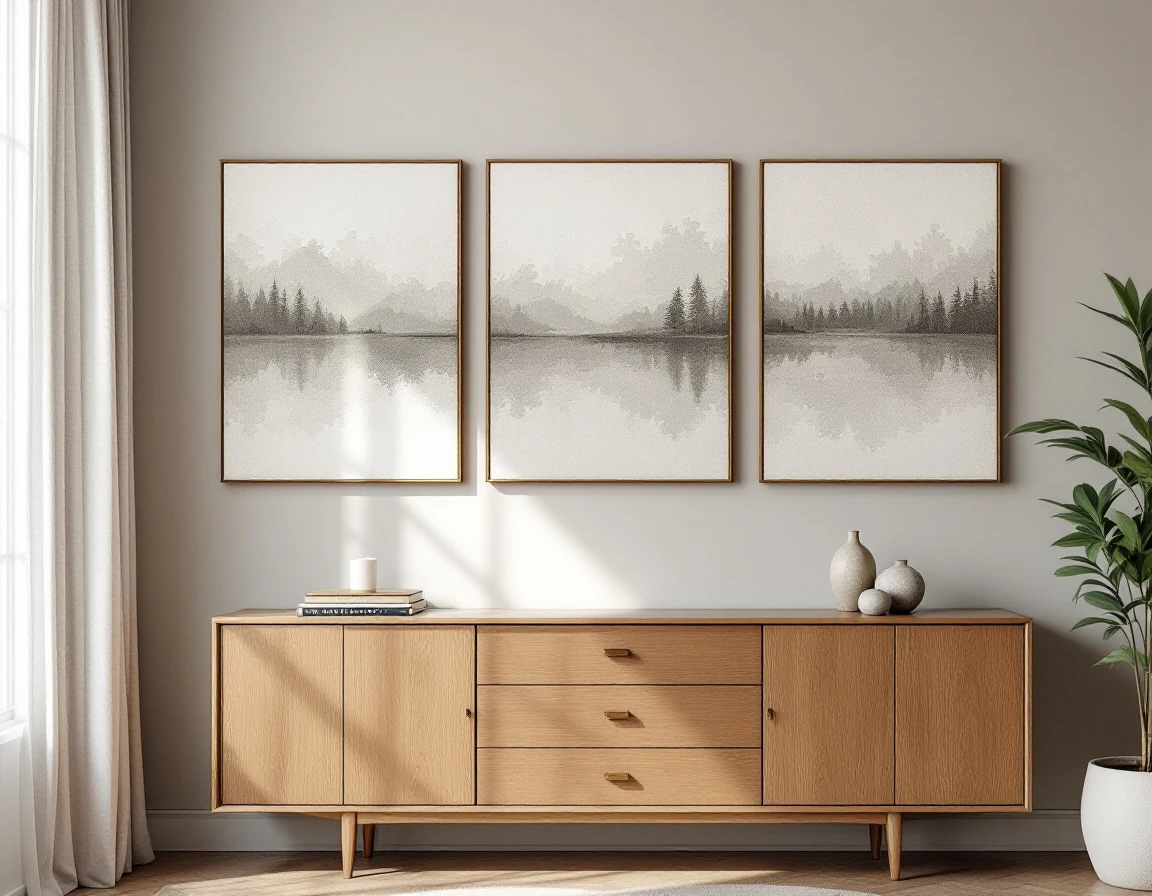
Among slow hobbies, puzzle assembly has the additional property of producing a display object - particularly if the puzzle is designed to be displayed. Puzzably makes gallery walls from coordinated puzzle panels designed for the wall. See what the Studio produces. The journal has more on the intersection of slow hobbies and designed objects.