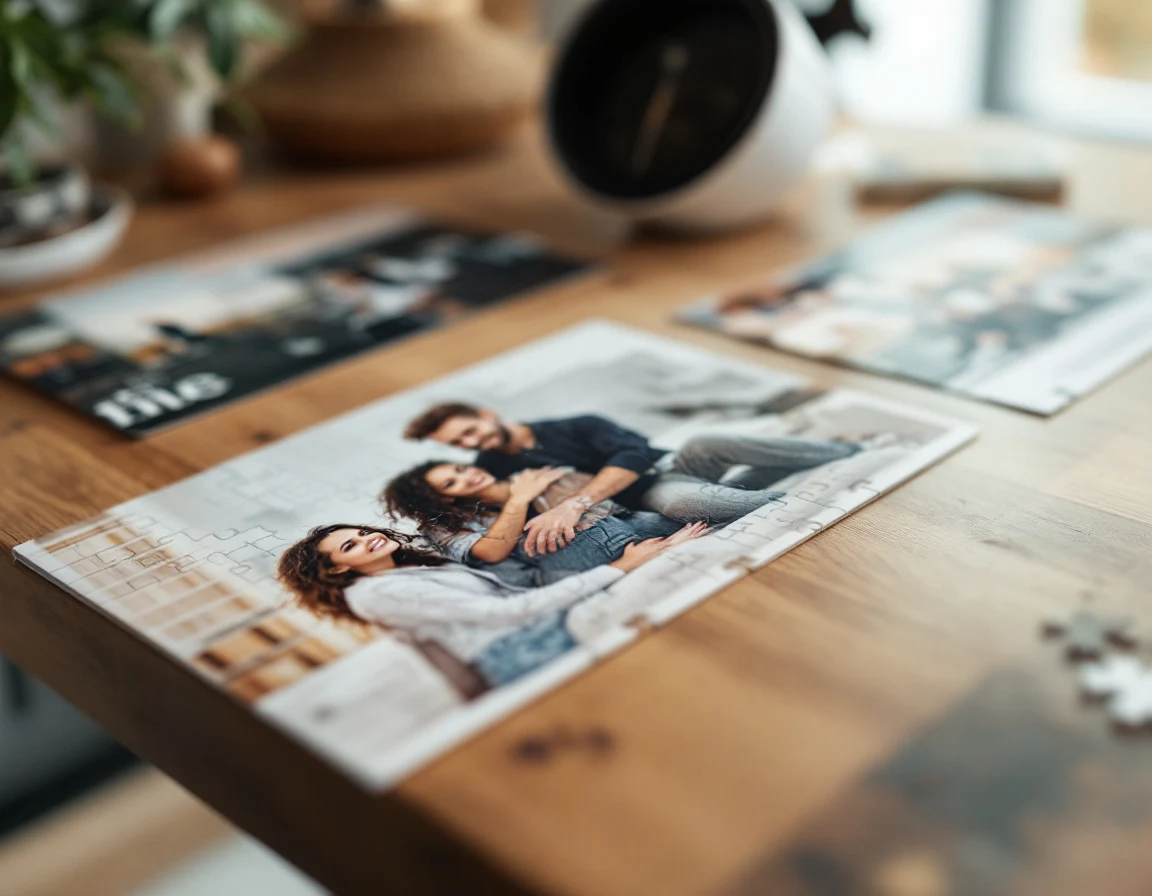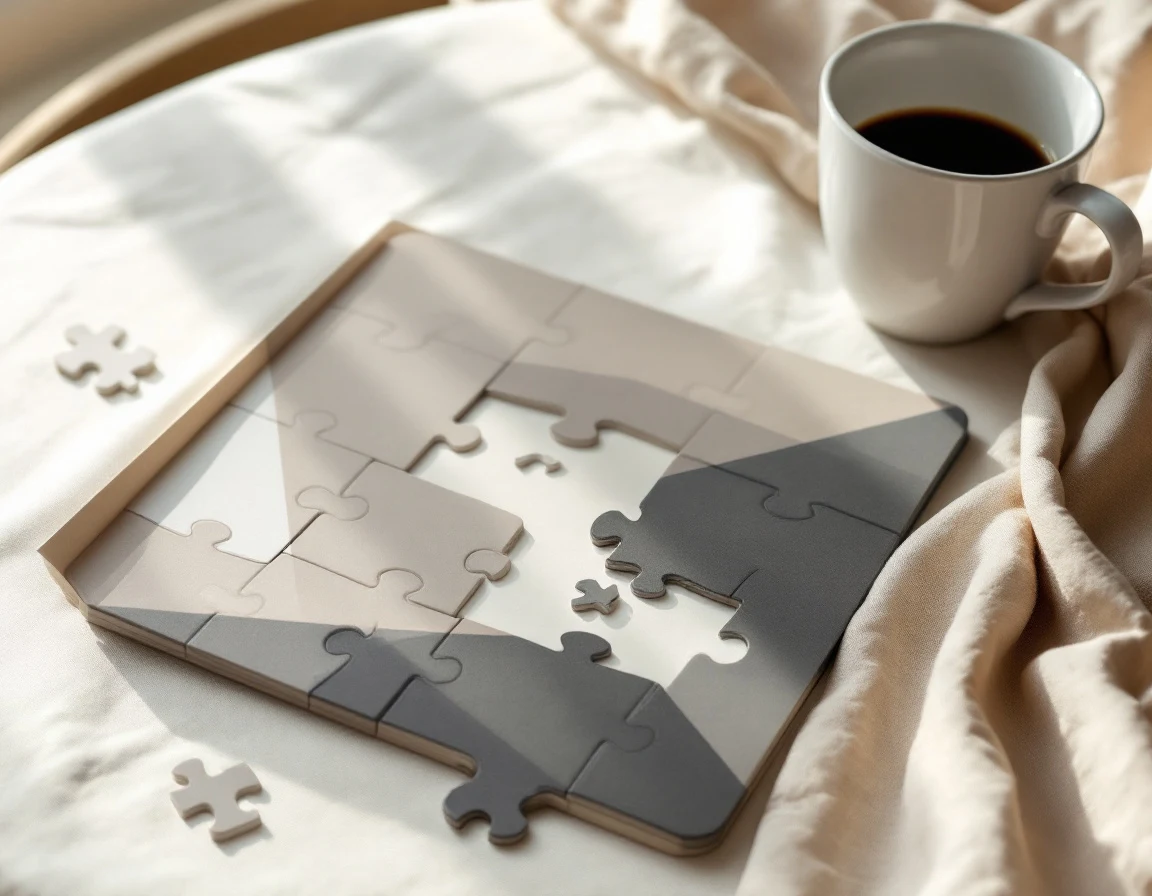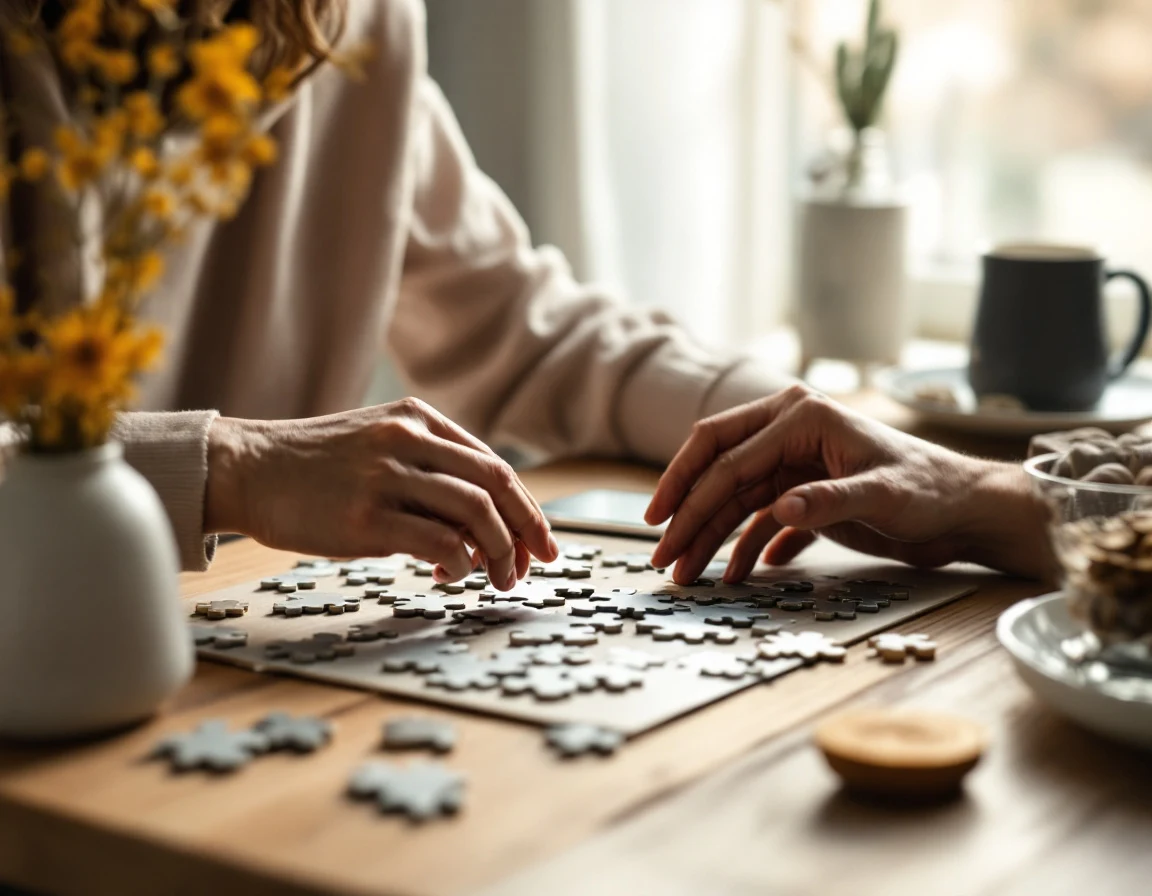
There is a 2023 paper from researchers at the University of Bath that found adults engaged in focused tactile activities - knitting, drawing, assembling puzzles - showed measurable reductions in cortisol within twenty minutes. The paper got a small wave of coverage in the usual wellness outlets, then disappeared into the feed. The finding was real enough. The medium was the wrong one to make it stick.
The puzzle doesn't have this problem.
Why Now
The current interest in jigsaw puzzles is not a pandemic leftover, though the pandemic helped. The numbers from the Toy Association show puzzle sales grew 300 percent in 2020, dipped slightly in 2021, and have continued to hold at roughly twice their pre-2020 baseline. The dip matters: the people who were buying puzzles because there was nothing else to do stopped buying them. The people who kept buying them made a choice.
That choice is about texture.
The word is used literally - the matte surface of a well-made puzzle, the slight resistance between interlocking tabs, the weight of a box that contains something - but also figuratively. Texture is what the digital environment has eliminated. Every surface in the phone is smooth, load-bearing, optimised. There is no friction in scrolling. There is no satisfying click when something is done. There is no object that remains when the session ends.
A puzzle leaves something on the table.
This is the argument that doesn't make it into the wellness listicles, because it isn't about stress reduction or screen time or anything you can measure with a cortisol panel. It's about the relationship between attention and objects. The puzzle asks for a specific kind of attention - sustained, non-verbal, spatially engaged - and returns something physical. An image that was not there an hour ago. An object that required something from you and now belongs to you.
The Design Problem Puzzle Companies Are Ignoring
Here is where the renaissance runs into its limits.
Most puzzles are designed to be consumed, not kept. The image is licensed stock - a Thomas Kinkade cottage, a bowl of fruit, a European city photographed from above. The box is cardboard. The pieces are thin. The finished puzzle, once photographed and uploaded for the brief social moment of completion, goes back in its box or into a bin bag.
This is by design, in the same way a cheap paperback is designed. You read it, you pass it on, you don't think about where it ends up.
The problem is that the people who are driving the puzzle renaissance are not the people who accept this arrangement. They are the same people who own Penguin Clothbound Classics because the books look right on a shelf. Who buy vinyl because the sleeve is twelve inches and worth hanging. Who replaced their Ikea ceramics with something from a craft market not because the ceramics work better but because they were made by someone.
These people are buying puzzles - and then throwing them away, because the puzzle industry has not built them an alternative.
What a Puzzle Worth Keeping Looks Like
In 2019, Liberty Puzzles in Boulder, Colorado started making puzzles from original art in laser-cut wood with interlocking piece shapes that have become - among the people who care about this - something like collector objects. A Liberty puzzle costs between $75 and $200. It sells out. The secondary market is real. The company built, essentially, a premium object that the puzzle category had previously refused to exist.
The gap Liberty didn't fill is the display problem. A Liberty puzzle, once assembled, is a beautiful thing. It goes back in its custom box. The box goes on a shelf or in a cupboard. The puzzle is not displayed. The object is not seen.
This is strange, because the finished puzzle is, by any reasonable definition, a work of art. It has an image, a scale, a surface quality. It was made, in part, by the person who assembled it - they handled every piece, they found where each one belongs. There is no other object in the average home that has been touched as much, for as long, as a finished puzzle.
And it goes in a box.
The Slipcase as an Answer
The vinyl record industry solved the display problem a long time ago. The sleeve - the twelve-inch paper or card cover - is not incidental. It is part of what you buy. Records are stored spine-out, the same way books are stored. The spine is readable. The sleeve protects the record. The rack holds the collection. You can browse your vinyl without removing anything from the shelf.
A puzzle that worked the same way would need: an image worth displaying, a slipcase that protects it and allows spine-out storage, and a rack that holds the growing collection. These are not complicated objects. They are objects that no puzzle company had built until recently.
The Puzzably slipcase is five-sided, clear acrylic, with a printed spine showing the edition number and month. It sits upright on a shelf. The puzzle, once assembled, slides back into the slipcase and stays there - visible, dateable, part of a sequence that grows month by month. The display rack holds twelve slipcases. A year of puzzles in 28 centimetres of shelf space, spine-out, like a run of Criterion editions.
This is the physical argument for why the puzzle renaissance is, in some segment of the market, more than a trend. The product that the trend was waiting for now exists.
The 500-Piece Specifically
There is a reason this piece is about the 500-piece puzzle and not the 1,000-piece puzzle, which is what most people picture when they picture a puzzle.
1,000 pieces requires a large table, kept clear for two to four days. It is a commitment that most adults cannot make without planning. The image, because it contains 1,000 pieces, tends toward the maximally detailed - landscapes, skylines, crowd scenes - which are interesting to construct but often not interesting to look at once assembled.
500 pieces fits on a dining table without displacing everything else. It takes three to five hours of focused assembly, achievable over a weekend evening or two weekday sessions. The image, because it contains 500 pieces, rewards simplicity - strong compositions, restrained palettes, subjects with presence at close range. The best 500-piece puzzles look like paintings. The worst 1,000-piece puzzles look like Where's Waldo.
The format is also the right format for the slipcase. At 500 pieces, the assembled puzzle is approximately 530 by 390 millimetres - a proportion that feels close to an LP sleeve, a coffee table book, a gallery print. It scales to a shelf. It scales to a wall. It does not require a dedicated gallery.
A Note on AI and What It Actually Means Here
The current moment in puzzle design includes AI-generated images, which some people find troubling and others find merely interesting.
The troubled position is understandable. If AI generation means the homogenisation of imagery - the same diffusion-model aesthetic applied to everything - then it is bad news for the puzzle as a design object. If it means access to image-making at a level of specificity that was previously impossible without hiring an illustrator, it is different.
What AI generation actually enables, in the context of puzzles, is personalisation at scale. A subscriber can describe what they want to look at - a coastal map of the place where they grew up, a botanical study in the colours of their kitchen, a celestial chart centred on the night they were born - and receive an image made specifically for them. Not a generic stock illustration with their name added. An image designed for their wall.
This is the convergence that the puzzle renaissance has been building toward, without quite knowing it. The format was always right. The display system was missing. The image generation technology was not yet available. Now all three exist at once.
What Remains
The word "renaissance" is too large for this. Puzzles are not experiencing a cultural rebirth on the scale of a movement. They are experiencing a quiet reclassification - from toy to object, from game to practice, from something you do to something you own.
That reclassification is meaningful for a small number of people who care about what they bring into their homes and why. The market for it is real. The products that serve it are, for the first time, beginning to exist.
If you are the kind of person for whom this argument lands, you probably already know it. The question is whether the puzzle you are assembling - or plan to assemble - will still be on your shelf in a year.
The answer depends entirely on what you buy.
Puzzably makes custom gallery walls from 3 to 9 panels, each a 500-piece puzzle designed as one cohesive work of art. See the wall tiers. The gallery has eight example starting points. If you want to start with something specific, the Studio takes any description you give it.